AWAJ Builds the Bridge: Alliance Puts Governments, Startups and Investors on One Stage in TokyoHinza Asif’s Asia Web3 Alliance Japan positions itself as the connector between policy, capital and founders Pakistan’s $4.5 billion tech export engine meets Japan’s engineer shortage at embassy summit
Tokyo, 15 July 2026 — The gap between governments that write the rules, startups that build the products and investors that fund them is where most cross-border partnerships die. On Wednesday, the Asia Web3 Alliance Japan set out to close it.
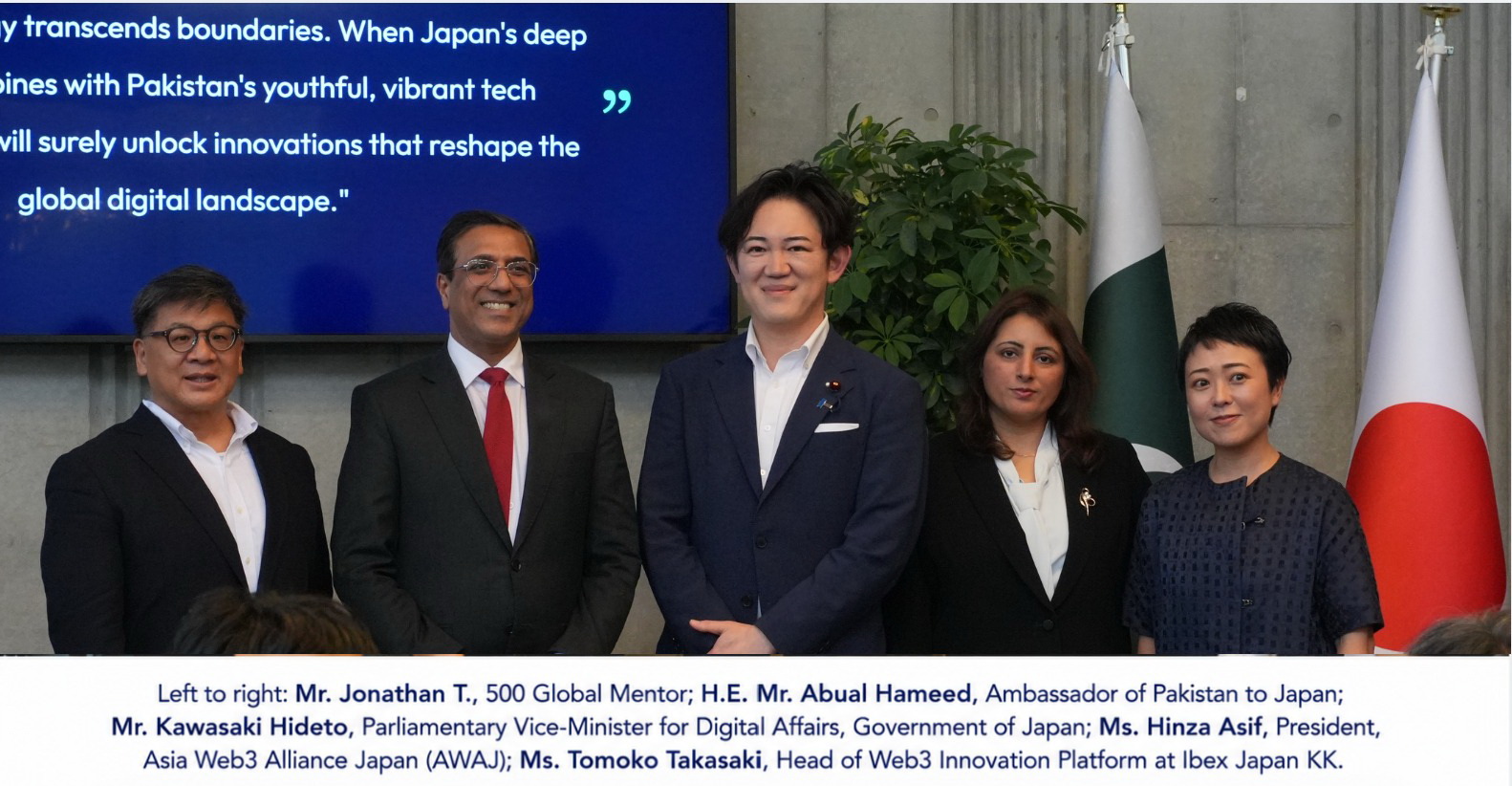
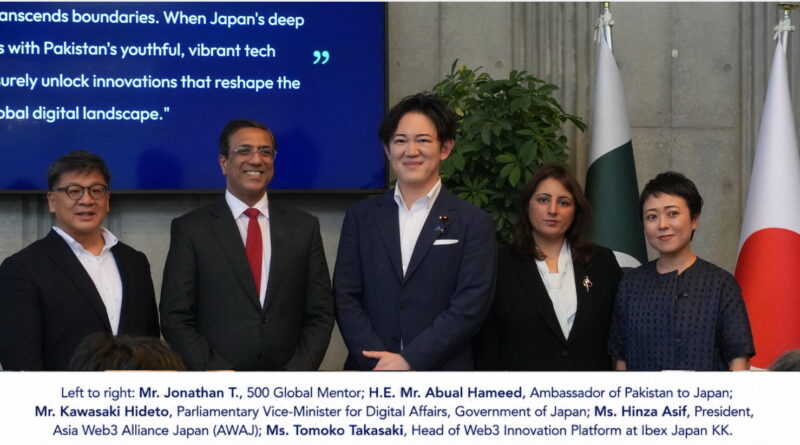
AWAJ, the Tokyo-based alliance led by President Hinza Asif, convened Japan’s Parliamentary Vice-Minister for Digital Affairs, Mr. Kawasaki Hideto; Pakistan’s Federal Secretary for IT and Telecommunication, Mr. Zarrar Hasham Khan; H.E. Mr. Abdul Hameed, Ambassador of Pakistan to Japan; Ms. Madiha Ali, Trade and Investment Counsellor at the Embassy; and panelists Mr. Jonathan T., 500 Global mentor and venture capital advisor, and Ms. Tomoko Takasaki of Ibex Japan KK and Antler Ibex — alongside venture investors and founders from both countries — under one roof at the Embassy of Pakistan. The summit was designed, in the alliance’s own framing, to be the bridge between government, startups and investors.
“That triangle is the whole point,” is how the alliance’s positioning can be summed up. Policy without founders is paper. Founders without capital stall. Capital without regulatory clarity stays home. AWAJ’s bet is that putting all three in the same room, on diplomatic ground, is what converts talk into deals.
Asif, who moderated the day’s panel, articulated the thesis at the heart of the event: no single actor can build a Pakistan–Japan innovation corridor alone.
Her argument ran on three legs:
• Government provides the rails — Japan’s new data laws, yen stablecoins and FIEA token rules on one side; Pakistan’s Special Technology Zones, PSEB support and startup tax reforms on the other. Both governments were physically present and pitching.
• Startups provide the momentum — and Pakistan’s founders, engineers and AI specialists need a credible entry point into Japan. Asif pointed to Japan’s Startup Visa as the practical, underused route, and to Japan’s acute shortage of technology professionals as a genuine career and business opening for Pakistani talent.
• Investors provide the fuel — and Japan’s deep capital markets and corporate innovation demand are hunting for exactly the kind of fast-growing, talent-rich ecosystem Pakistan now represents.
The venue itself was part of the argument. By staging the summit inside the embassy, AWAJ gave the government–startup–investor triangle official standing from day one: Japanese institutions get a trusted, diplomatic gateway into Pakistan’s ecosystem; Pakistani founders get a direct line into Japan’s policy and business establishment.
Asif made clear the alliance sees Wednesday as a founding act, not a one-off — the first plank of an institutionalized corridor carrying investment one way and talent the other.
The bridge’s government pillar showed up in force.
Parliamentary Vice-Minister Kawasaki Hideto used his keynote, “Creating the Digital Future: Startup Co-Creation in the AI & Web3 Era,” to lay out Japan’s newly liberalized playbook: this month’s amendments to the Personal Information Protection Act and Data Utilization Act easing data-consent rules for AI, full-scale rollout of yen stablecoins as a low-cost cross-border payments rail, the migration of token regulation to the Financial Instruments and Exchange Act, the LDP’s new Next-Generation AI and On-Chain Finance Project Team, and Japan’s leadership of Data Free Flow with Trust.
His close echoed AWAJ’s bridge thesis: combining Japan’s deep experience with Pakistan’s youthful momentum, he said, can unlock a “new Digital Silk Road.”
From Islamabad, Federal Secretary Zarrar Hasham Khan supplied the other side of the ledger by video link: IT exports on track to top $4.5 billion, a record; $1.1 billion in freelance earnings; 26,000-plus IT companies; 75,000-plus graduates a year from more than 260 universities; exports to over 170 countries. His offer to Japan — remote delivery, offshore development or skilled-talent migration.
Ambassador Abdul Hameed and Trade and Investment Counsellor Madiha Ali, the day’s master of ceremonies, anchored the diplomatic end, with the Ambassador telling Japanese investors that Pakistan’s young, English-proficient workforce is a natural complement to Japan’s innovation goals.
The panel Asif moderated put the other two corners of the triangle in direct conversation.
Jonathan T., a 500 Global mentor and venture capital advisor, spoke to the investor’s checklist — what emerging-market founders must show to raise across borders, and how acceleration and mentorship close the readiness gap.
Tomoko Takasaki, head of the Web3 Innovation Platform at Ibex Japan KK and senior manager at Antler Ibex, brought the corporate-venture view: how Japanese corporates’ demand for innovation can plug directly into Pakistan’s founder pipeline.
The panel’s sharpest thread was talent. With Japan projected to be short several hundred thousand IT engineers by 2030 and widening visa pathways in response, Pakistan’s engineering pipeline was named plainly as a strategic asset for both nations.
The alliance said follow-ups are already in motion: cross-border investment facilitation, corporate–startup pilot collaborations, structured talent-mobility programs and continued government-to-government dialogue — each one a load-bearing element of the bridge Asif described.
AWAJ, together with the Embassy of Pakistan, Tokyo, intends to institutionalize the partnership, with the alliance holding its position at the center of the triangle it assembled