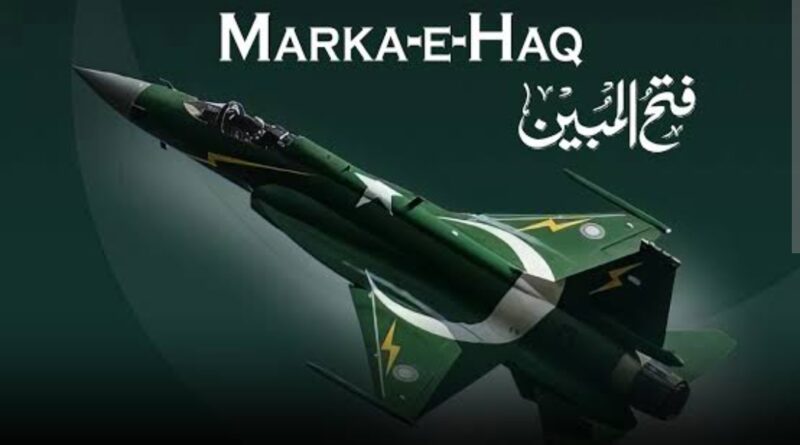
In Marka-e-Haq, Pakistan shatters Modi’s myth of military dominance, regional supremacy
Shattering the Narandara Modi’s deceptive myth of military dominance, and regional supremacy, Pakistan had given a matchless response to a three times bigger enemy after it attacked Punjab and Azad Kashmir on the mid night of May 6-7 last year
Shattering the Narandara Modi’s deceptive myth of military dominance, and regional supremacy, Pakistan had given a matchless response to a three times bigger enemy after it attacked Punjab and Azad Kashmir on the mid night of May 6-7 last year.
By Fakhar-e-Alam
PESHAWAR, (APP):Shattering the Narandara Modi’s deceptive myth of military dominance, and regional supremacy, Pakistan had given a matchless response to a three times bigger enemy after it attacked Punjab and Azad Kashmir on the mid night of May 6-7 last year.
India’s unprovoked missiles and drone strikes against nine sites in Pakistan and Azad Kashmir have resulted in the death of dozens of civilians including women and children.
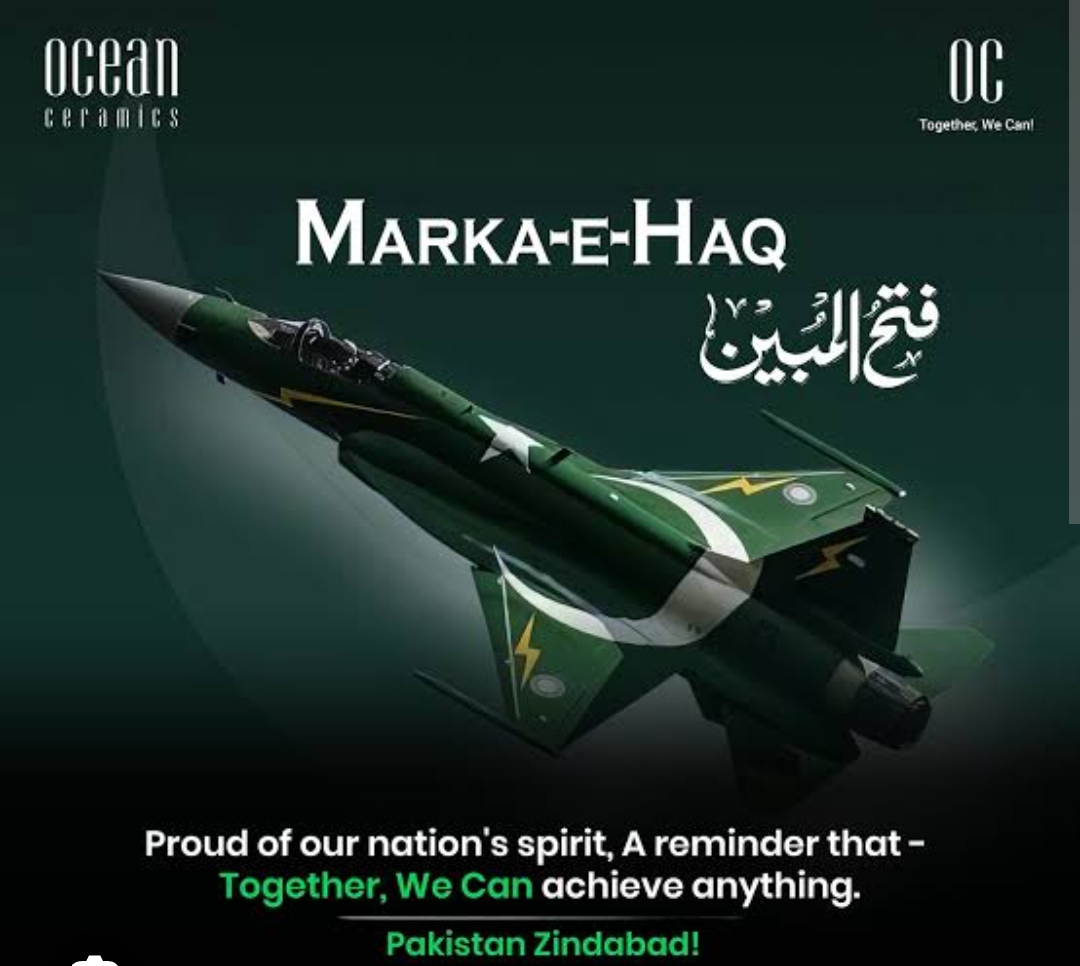
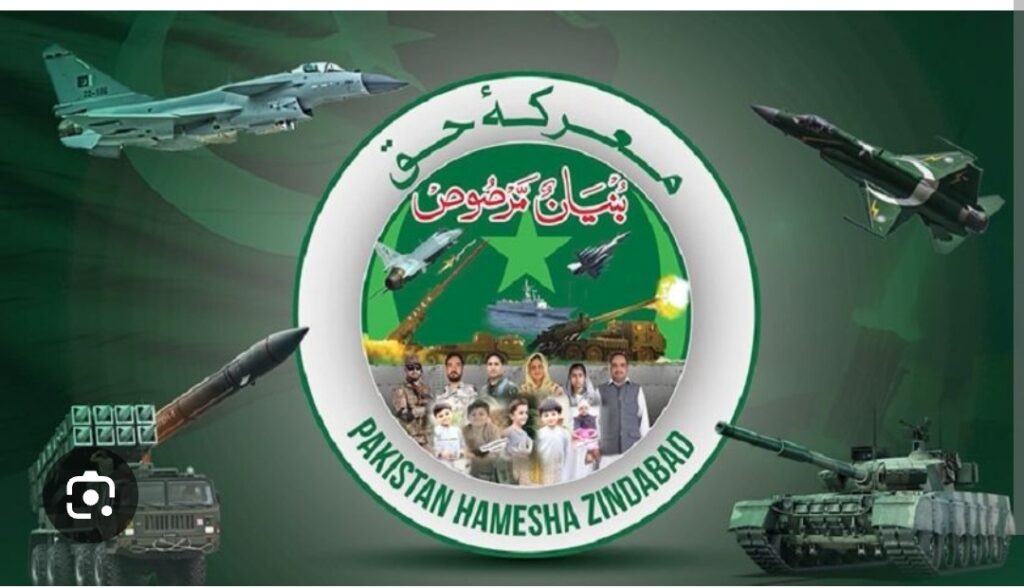
Pakistan Forces have bravely responded to the enemy after starting Operation Bunyanum Marsoos on broad daylight of May 10, 2025 and shot-down multiple warplanes of the enemy including highly sophisticated Rafale besides destroying key enemy’s military installations.
With thunderous precision, Pakistan Army and PAF struck like lightning across the breadth of India’s defenses and silenced the enemy’s guns.
Pakistani Forces, in a single unstoppable day, have not only silenced the Indian military but also dismantled its air bases at Suratgarh, Sirsa, Srinagar, Jammu, and Pathankot besides obliterated BrahMos missile sites at Beas and Nagrota. Even the vaunted S-400 systems at Adampur and Bhuj were dismantled by Pakistani Forces, stripping India’s shield bare.
To celebrate Pakistan’s historic victory, Prime Minister Muhammad Shehbaz Sharif had announced to mark May 10 as Marka e Haq Day. On the call of the Prime Minister of Pakistan, Marka e Haq is celebrated throughout the country including Khyber Pakthunkhwa.
“In Marka e Haq, Pakistan shattered Modi’s so-called political capital and myth of military dominance and reginal supremacy,” said Professor Dr. Adnan Sarwar Khan, former Chairman, International Relations Department at University of Peshawar while talking to APP on Wednesday.
He said that Pakistan Air Force (PAF), in a decisive show of great strength, resolve and fighting skills, repelled Indian blatant aggression befittingly and shot down multiple enemy’s aircraft including the much-vaunted Rafale besides destroying key enemy’s military installations and bases in precision strikes.
“This resounding success has not only validated Pakistan’s aerial dominance but also dealt a severe blow to Narendra Modi’s carefully curated deception myth of military invincibility in the region,” said Dr Adnan.
He said Pakistan was left with no option but to respond against uncalled for Indian missiles and drones strikes at Punjab and Azad Kashmir.
Dr Adnan said Marka e Haq proved all speculations and negative rhetoric of the Indian media against Pakistan as wrong. The enemy’s news channels, fanned by nationalist fervour, had painted Pakistan as a crumbling adversary incapable of withstanding a strike and later started criticism against PM Modi after seeing the Indian Force’s crushing defeat in Marka e Haq.
Professor Dr A.H.Hilali, former Chairman, Political Science Department at University of Peshawar said that Marka-e-Haq’s historic success had badly tarnished the Modi image in the world and was facing isolation at the global stage.
“Modi, who built his political capital on division, hatred, abuses against minorities and artificial dominance, has been exposed after he miscalculated Pakistan’s military might and faced humiliating defeat at the hands of Pakistani Defense Forces,” said Dr. Hilali.
“Had Modi Govt accepted the PM Shehbaz Sharif’s joint investigation offer to probe Pehalgam incident, the world have not mocked the Hinduvata regime,” he said.
Dr Hilali said that India’s much-publicized investments in 36 Rafale jets and five S-400 missile systems were meant to cement its air superiority.
However, these systems have badly failed in the face of Pakistan’s modern air defense capabilities that effectively neutralized the enemy’s advanced hardware and technology.
Brigadier (Retd) Mehmood Shah, former secretary law and order of erstwhile Fata explained that Pakistan’s integrated defense approach outmatched India’s eclectic mix of high-cost Western and Russian platforms.
“The J-10C’s long-range radar and missile systems have allowed Pakistani pilots to target Rafales from nearly 200 kilometers away and succeeded in downing multiple jets of the enemy. “Flashy weapons do not win wars while strategy and cohesion with bravery do.”
In Marka-e-Haq, he said Pakistan’s UAVs successfully completed their missions without facing any hindrance from across the border.
Their freedom to navigate Indian airspace unchallenged was enhanced after the destruction of India’s protective layer, the S-400 system, exemplifying that successful drone deployment was predicated on its integration within tactical calculations and strategic doctrine.
Beyond the battlefield, internal dissent in India has surged after Marka e Haq and the political graph of PM Modi has significantly slashed after the failed Sandoor operation.
He said that even the marginalized communities, particularly Sikhs and lower-caste Hindu groups, used social media to voice their frustrations. Clashes between Hindutva activists and minority groups had erupted across Indian cities, exposing deep societal fissures long concealed beneath India’s so called globalized image.
The conflict, which lasted four days, ended on May 10 following a U.S.-brokered ceasefire not due to Indian triumph, but because India found itself without a strategic path forward besides seeing Pakistan’s heroic battlefield performance and technology supremacy.
The Indian public and civil society, once rallied behind nationalistic fervor, began questioning the legitimacy of the May conflict and the false narrative spun by their own media.
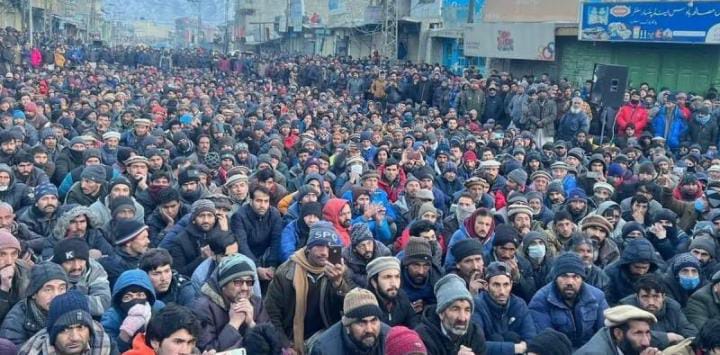
The experts said the military success has catalyzed a wave of national unity within Pakistan, with political parties and civil society taking out rallies in support of the armed forces.
Social media has also played a vital role in galvanizing this support, transforming the crisis into a defining moment of national unity in Pakistan.
The Modi’s uncalled for unprovoked aggression ushered in Pakistan’ leaders have firmly promised to work with unity and cohesion against the aggressor.
The nation have discovered newfound unity, resilience, and diplomatic credibility. Militarily, socially, and politically, Pakistan has emerged a stronger and more self-assured state.
In contrast, Modi’s credibility lied in tatters. The myth of India’s military dominance and regional supremacy have been shattered, and the nationalist fervor that once propelled Modi now threatens to turn into political liability.
Dr Adnan said the skies over South Asia have spoken on May 10 last. What was intended to be Modi’s grand display of dominance has instead become a historic moment of supremacy of Islamabad and rise of a revitalized Pakistan.
Marka-e-Haq has not only reinforced the centrality of the aerial domain within a conventional war between Pakistan and India but the world also learned that domination within the South Asian region does not rest upon numbers, whether manned or unmanned aircraft.
On the contrary, it is the fielding of quality platforms and visionary leadership that results in clear victories. Indubitably, a new leader has been established, with Pakistan’s position on the international stage emerged as that of a net regional stabiliser, showing restraint, but always prepared to promote peace and frustrate the enemy’s designs with full might.