Uzbekistan and Jordan: from political dialogue to practical cooperation
Partnership with Jordan serves several of Uzbekistan’s strategic interests. It provides access to sectoral expertise in the chemical industry, pharmaceuticals, mining and water-saving technologies, strengthens ties with markets in the Middle East and North Africa, and expands cooperation on regional security and education. For Jordan, cooperation with Uzbekistan creates opportunities to operate in Central Asia’s economic space and participate in industrial projects. How can these complementary strengths be translated into sustainable trade, joint production and investment? The answer to this question defines the current stage of relations.
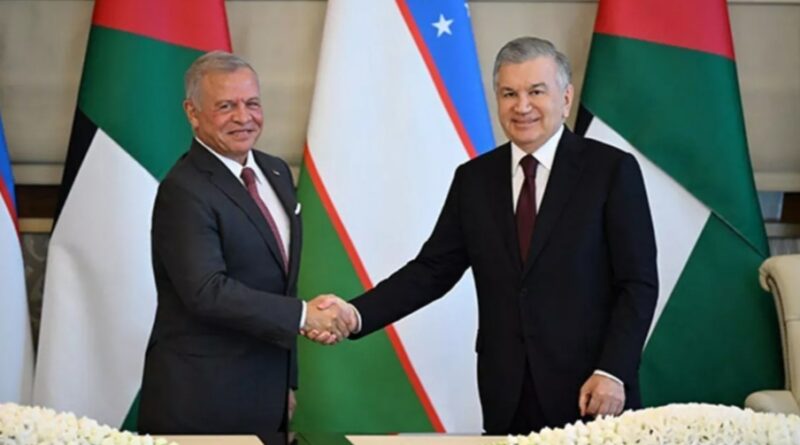
Diplomatic relations between the two countries were established in 1993 and have gained new scope and substance in recent years. A turning point in this new phase was the state visit of King Abdullah II ibn Al Hussein to Samarkand on 25-26 August 2025, the first such visit in the history of bilateral relations. President of the Republic of Uzbekistan Shavkat Mirziyoyev and the King of Jordan adopted a Joint Statement on Strengthening Partnership. A total of 15 documents were signed, including agreements on the reciprocal promotion and protection of investments, the establishment of a Joint Commission and the abolition of visa requirements. These decisions established a treaty framework and permanent mechanisms for closer relations.In 2026, the agreements moved into the implementation phase. Interparliamentary friendship groups and a Business Council were established, and the first meeting of the Intergovernmental Commission took place on 2 April. Scheduled flights between Amman and Tashkent began in July. They operate twice a week, with an average load factor exceeding 80 percent. Visa-free stays of up to 30 days and direct air services have made travel easier for entrepreneurs, experts, tourists and representatives of educational institutions. Together, these measures have ensured ongoing interagency coordination, strengthened business contacts and facilitated travel between the two countries.Cooperation has also expanded to the multilateral level. On 6 November, President Shavkat Mirziyoyev and King Abdullah II met in Astana on the sidelines of the Aqaba Process. Initiated by Jordan, the platform has become a forum for discussing regional security and counterterrorism with Central Asian leaders. Bilateral cooperation is thus complemented by regional dialogue.Within the Aqaba Process, Uzbekistan put forward the initiative «Digital Development for People» and highlighted the need for international coordination on artificial intelligence governance, security and education. The economic significance of this agenda lies in creating a secure and predictable environment for investment, strengthening digital skills and training specialists for emerging industries. Multilateral dialogue therefore naturally complements industrial and technological cooperation between the two countries.
The institutions established provide a basis for practical economic engagement. Growth in bilateral trade needs to be consolidated through reliable supplies, production chains and long-term investment. This was the purpose of the working visit to Jordan on 26-27 October by a delegation led by Minister of Investment, Industry and Trade Laziz Kudratov. Talks were held with the heads of relevant government bodies and representatives of the Royal Court, the Chamber of Industry and leading companies. An Uzbekistan-Jordan roundtable connected the intergovernmental agenda with business initiatives in industry, agriculture, pharmaceuticals, energy and logistics. The main focus was on joint production, attracting capital and increasing trade.Between 2021 and 2025, bilateral trade increased 8.5-fold, with growth of 79.2 percent in 2025 alone compared with the previous year. This trend reflects more active business ties, although much of the partnership’s considerable potential remains untapped. The text of the Preferential Trade Agreement agreed in 2026 covers 300 product categories. The introduction of the preferences provided for in the agreement will create conditions for expanding and diversifying supplies.Arrangements are currently being coordinated to open an Uzbekistan trading house in Jordan. Its launch is planned during the forthcoming state visit. The trading house will help promote Uzbek products, establish direct contacts with Jordanian buyers and organize regular export deliveries.Investment ties are also taking on a measurable scale. By October, 23 enterprises with Jordanian capital were operating in Uzbekistan, compared with six in 2021. A portfolio of 13 projects at various stages of preparation has been developed. This trend indicates a gradual transition from individual agreements to a sustained Jordanian business presence.Industrial cooperation provides the clearest illustration of the two economies’ complementary strengths. Five initiatives are under consideration in the chemical industry. Two projects by «Spartan Modern Industries» have been included in the State Investment Programme. A package of projects for the production of phosphate fertilizers is being prepared jointly with «Jordan Phosphate Mines».«Dar Al-Dawa» has identified 31 medicines for potential localization in Uzbekistan. Imports of these products amount to USD 105 million. Establishing their production domestically could expand the national pharmaceutical manufacturing base and replace a portion of imports.A project by «Manaseer Group» is also being implemented. The proposed technology is designed to reduce water consumption and the use of conventional fertilizers by 50 percent in fodder crop cultivation. «MAIS Irrigation», which already purchases Uzbek polymers, is beginning preparations to manufacture water-saving systems. Existing polymer supplies could thus develop into joint production.At the same time, Uzbek companies are advancing their own initiatives in Jordan. «UzBasalt» and «National Arab Mining» have completed the feasibility study for a basalt fibre plant with an annual capacity of 10,000 tonnes and have begun preparing project documentation.
Textile companies are exploring the establishment of production facilities in the Aqaba industrial zone to supply the US market under Jordan’s trade agreements. The participation of Uzbek businesses in geological exploration and infrastructure projects is also under consideration. Industrial cooperation therefore envisages locating production facilities in both countries.This new geography of production requires reliable logistics. The Port of Aqaba and the special economic zone of the same name could become a key gateway for Uzbek products entering markets in the Middle East and North Africa. The establishment of a trade and logistics centre is being explored, while the launch of «Royal Jordanian» cargo flights is planned for January 2027. Direct passenger services, visa-free travel, anticipated trade preferences and Aqaba’s infrastructure could form an interconnected system that reduces delivery times and logistics costs.Today, Uzbekistan-Jordan cooperation rests on support at the highest level, a treaty framework, functioning institutions and a portfolio of projects.
The forthcoming state visit offers an opportunity to formalize roadmaps, timelines and responsible implementing bodies, linking the work of the mechanisms established to the delivery of specific initiatives. This will ensure continuous follow-through on each agreement until it becomes operational.Consistent implementation of the project portfolio will bring together Jordan’s sectoral expertise, Uzbekistan’s manufacturing base and Aqaba’s logistics capabilities. This combination will give the partnership a scale extending beyond individual projects and establish a lasting economic link between Central Asia and the Middle East.