
Hashoo Foundation Drives Community-Led, Youth-Driven Peacebuilding through Social Entrepreneurship Backed by EU, UNODC, NACTA and KPCVE
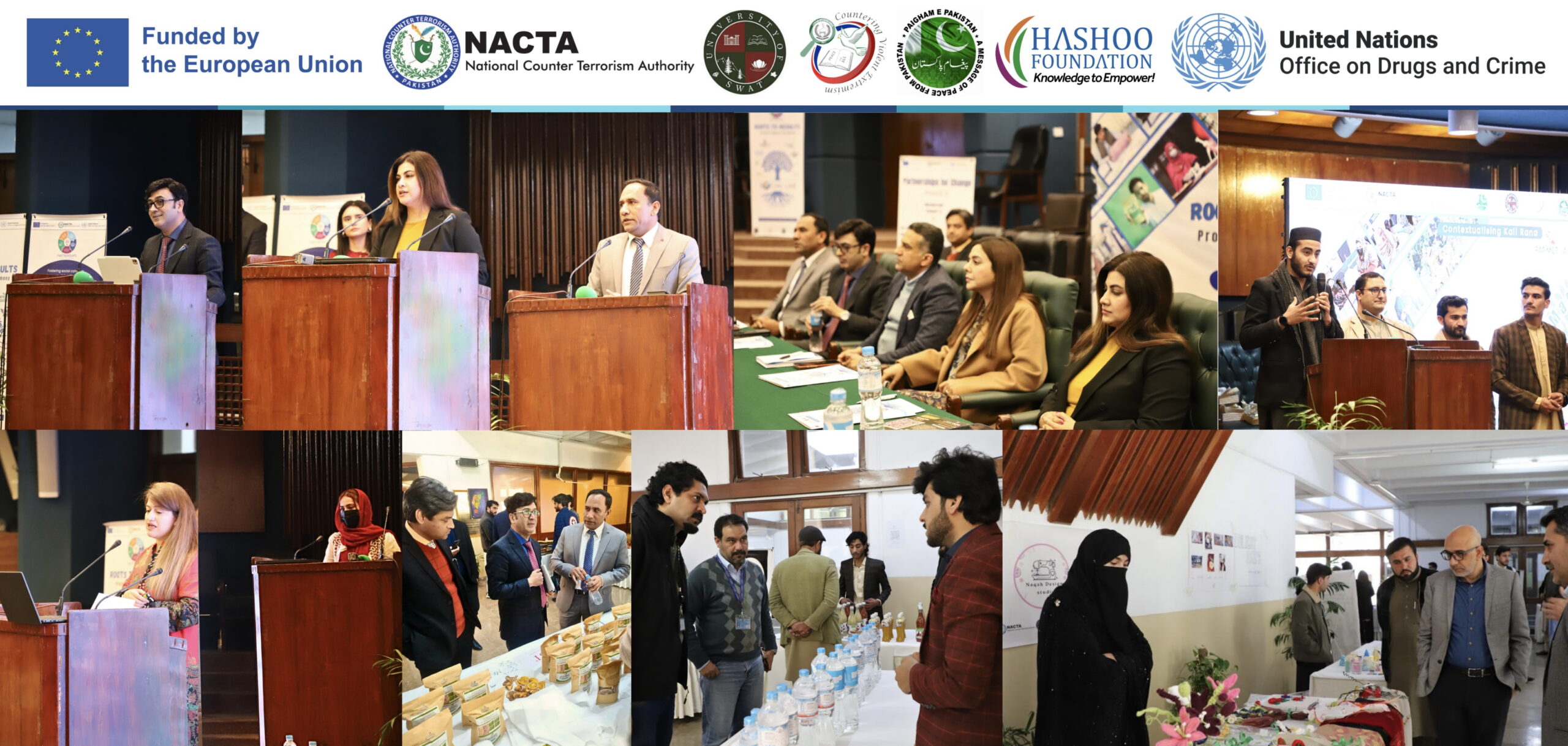
Islamabad, 8 January 2026 — Hashoo Foundation (HF), in collaboration with the United Nations Office on Drugs and Crime (UNODC) and the National Counter Terrorism Authority (NACTA), in partnership with KPCVE, and with financial support from the European Union (EU), marked a major milestone in youth centred and community-driven peacebuilding through social entrepreneurship at the “Roots to Results: Partnerships for Change Impact Ceremony.” The event contextualized the transformation of Kali Rana and showcased nine youth-led social enterprises that had graduated from the Social Lab, a social impact incubator, alongside a locally grounded social entrepreneurship model, demonstrating tangible outcomes for partners and policymakers to replicate and scale across Pakistan.
Prominent dignitaries in attendance included the Guest of Honor, Dr. Najeeb Ullah, Member Planning Commission (Science and Technology); Ms. Amnah Batool, Focal Person, Prime Minister’s Youth Programme; Ms. Fatima Raza, Programme Officer, Crime Prevention, UNODC Pakistan; Dr. Muhammad Qasim Khan, Director General, KPCVE; Dr. Muhammad Zia-ul-Haq, Director General, Islamic Research Institute; and Ms. Mahwish Afridi, Project Lead and Director Strategic Support Unit, Hashoo Foundation.
The event brought together government representatives, development partners, industry experts, academia, media, and civil society to witness how HF’s Social Lab and the internationally award-winning SMaRT (Sustainable Methods and Resilient Technologies) Village model translate grassroots innovation into measurable social and economic impact.
Funded by the European Union, executed by UNODC Pakistan and NACTA, and implemented by Hashoo Foundation in collaboration with KPCVE and the University of Swat, the project promotes youth-led social entrepreneurship as a tool for peacebuilding. Under the Education 4.0 framework, 46 youth participants received future-ready technical and soft-skills training in social entrepreneurship through the Social Lab. As part of the peace dividend, essential goods and inputs were procured for all nine social enterprises, enabling them to operationalize their business ideas in Gulibagh, transforming the community into a SMaRT Village.
A key highlight of the ceremony was the Social Innovation Avenue Walk—an immersive, curated experience featuring all nine social enterprises that graduated from the Social Lab ecosystem. The Avenue provided stakeholders with an opportunity to engage directly with Agents of Change from Social Lab’s Cohorts I and II, witnessing firsthand how each enterprise addresses local challenges, creates inclusive livelihoods, and strengthens community resilience.
Speaking at the event, Dr. Najeeb Ullah reaffirmed:
“The Government of Pakistan remains committed to create an enabling environment where resilience-driven innovation and social entrepreneurship thrive as essential pillars of inclusive growth. This is integral to our national development agenda and reflects our long-term vision for sustainable prosperity.”
Ms. Fatima Raza, UNODC Pakistan, reaffirmed UNODC’s commitment to preventive, people-centred approaches to Countering and Preventing Violent Extremism (CVE/PVE), noting that empowering youth with future-ready skills and market access directly addresses the structural drivers of violent extremism.
Dr. Muhammad Qasim Khan, Director General, KPCVE, highlighted the project’s strong policy relevance, emphasising the importance of evidence-based action research and the collaborative role of academia, civil society organisations, and government in fostering sustainable peace.
Mahwish Afridi, Project Lead at Hashoo Foundation, stated:“Roots to Results validates the strength of our ecosystem approach. The Social Lab and SMaRT Village strategy enable local solutions for community-driven peacebuilding by integrating socio-economic development with participatory decision-making. By leveraging local enterprises, shared resources, and inclusive governance, the model addresses conflict drivers while promoting sustainable livelihoods and collective resilience.”
Held under the broader framework of the EU-funded Countering and Preventing Terrorism in Pakistan (CPTP) project, the event showcased collective efforts to strengthen social cohesion, peacebuilding, and youth-driven innovation in Swat, a region adversely affected by terrorism. UNODC, together with its local partner Hashoo Foundation, has played an instrumental role in equipping vulnerable youth in the region to develop viable social enterprises that utilise local resources and contribute to economic growth from micro to macro levels.