
FM Dar triumphantly projects Pakistan FP
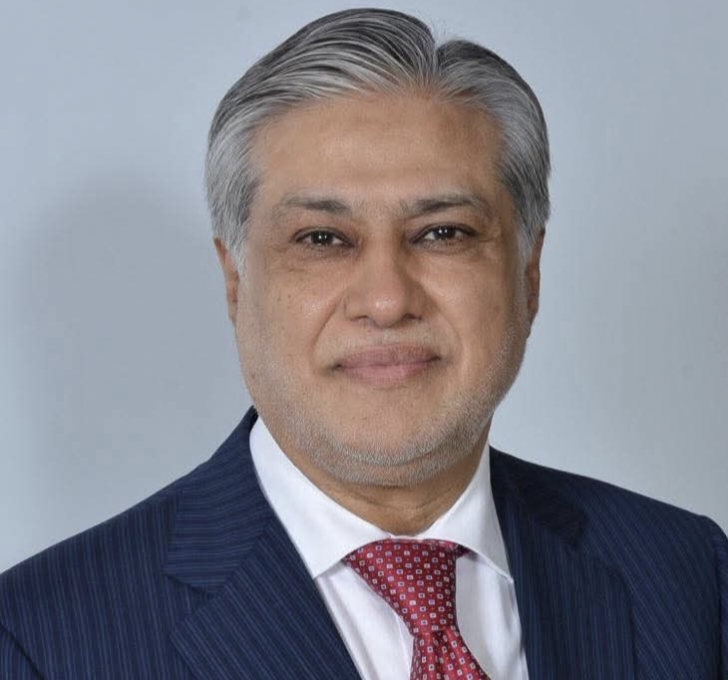
The global order is undergoing a profound transition. Intensifying great-power competition, persistent instability in the Middle East, and evolving security dynamics in South Asia have placed Pakistan’s foreign policy at a defining moment. In an era increasingly shaped by competing alignments rather than rigid blocs, Pakistan’s ability to maintain balance, credibility, and strategic clarity has become both a necessity and a strength. While the impact of this approach is visible today, its intellectual foundations trace back to the country’s founding vision.The founding father, Muhammad Ali Jinnah, articulated a foreign policy rooted in sovereign equality, principled independence, and constructive engagement. His emphasis on maintaining relations based on mutual respect—rather than subordination to any power axis—established a diplomatic identity defined by restraint, dignity, and autonomy. This foundational philosophy continues to inform Pakistan’s external conduct in an increasingly complex world.In the early decades, this vision was refined by a distinguished generation of diplomats. Sir Zafarullah Khan set a high standard through his compelling advocacy at the United Nations, where legal precision and moral conviction defined Pakistan’s diplomatic voice. Zulfikar Ali Bhutto introduced a more assertive posture, projecting Pakistan as a confident global actor, though his legacy remains debated in light of the 1971 crisis. The measured diplomacy of Sahibzada Yaqub Ali Khan brought sophistication and balance, while Agha Shahi demonstrated prudence in navigating periods of heightened geopolitical tension. Together, they forged a tradition of principled yet pragmatic statecraft.A decisive shift occurred under Nawaz Sharif, who reoriented foreign policy toward economic diplomacy. Recognizing that durable influence in international affairs is underpinned by economic resilience, his approach emphasized strategic partnerships, infrastructure development, and regional connectivity. Expanded engagement with China and large-scale economic initiatives reflected a forward-looking framework—positioning Pakistan as a conduit of trade and cooperation rather than merely a geopolitical frontier.The ongoing conflict involving the United States, Israel, and Iran has further complicated the regional and global strategic environment. Since February 2026, coordinated strikes by the United States and Israel on Iranian military and nuclear-linked targets have triggered retaliatory missile attacks by Iran across the region, raising fears of a wider war. � The escalation has extended to critical energy infrastructure, including major gas fields, contributing to a sharp rise in global oil prices and disruption of supply routes, particularly through the strategically vital Strait of Hormuz. � Beyond immediate military consequences, the conflict carries far-reaching implications: global inflationary pressures, energy insecurity, risks of regional spillover into Gulf states, and a heightened probability of prolonged instability across the Middle East. In such a volatile environment, the need for balanced diplomacy and de-escalatory engagement has become more urgent than ever.Encyclopedia BritannicaThe Guardian +1It is within this challenging context that Pakistan’s foreign policy—under the stewardship of Ishaq Dar—has demonstrated notable composure and strategic restraint. Managing relations with major powers while maintaining equilibrium in the Middle East requires calibrated judgment. In the context of tensions involving Saudi Arabia and Iran, Pakistan has adopted a cautious yet constructive approach, emphasizing de-escalation and diplomatic engagement.Amid threats to energy security, maritime routes, and regional stability, Pakistan has positioned itself as a credible voice for moderation. Through sustained diplomatic engagement and a balanced posture, it has retained trust across competing actors. In this environment, the diplomatic conduct of Ishaq Dar reflects continuity with Pakistan’s traditional emphasis on balance, while adapting effectively to contemporary geopolitical realities.Equally significant is the role of coordinated national leadership. The political direction provided by Prime Minister Shehbaz Sharif has ensured clarity and responsiveness, while the strategic insight of Field Marshal Asim Munir has reinforced the security dimension of foreign policy. This civil-military alignment has strengthened Pakistan’s credibility and coherence on the global stage.At the same time, Pakistan continues to assert a principled voice within the Muslim world, particularly on issues such as Palestine, reflecting both moral commitment and diplomatic continuity.In sum, Pakistan’s foreign policy today represents a transition from reactive positioning to structured, forward-looking statecraft. From the vision of Muhammad Ali Jinnah to the economic diplomacy of Nawaz Sharif, and now the calibrated engagement of Ishaq Dar, a clear continuum is visible—one that reinforces Pakistan’s standing as a balanced and credible actor in international affairs.As the contours of a new global order begin to emerge, Pakistan’s foreign policy—anchored in realism, guided by principle, and executed with balance—positions the country not only to safeguard its national interests but also to contribute meaningfully to regional stability and global peace.

Pingback: dutasteride capsules for hair loss
Hey, tried my luck with Khelostar’s losing bonus. Not bad, softened the blow a little. Give it a shot if you’re feeling down on your luck. Check it out here: khelostarlosingbonus
Jiliwincom, alright! The games are smooth and the site’s easy to navigate. Definitely worth checking out if you’re in the mood for some online action. Here’s the link: jiliwincom
Heard some buzz about 119 bet.com. Might be worth checking out for some quick bets, you know? See what’s up here: 119 bet.com
95gqj9