
A Shared Birthdate, Two Defining Leadership JourneysNawaz Sharif: A Visionary Statesman
December 25 stands as one of the most profound dates in Pakistan’s national history—a day inseparably linked with leadership, vision, and destiny. It marks the birth anniversary of Quaid-e-Azam Muhammad Ali Jinnah, the founder of Pakistan, whose constitutional foresight, political clarity, and unwavering resolve transformed the dream of a separate homeland into reality. Quaid-e-Azam’s life symbolizes discipline, rule of law, democratic governance, and economic self-respect—principles that continue to define Pakistan’s ideological foundations.
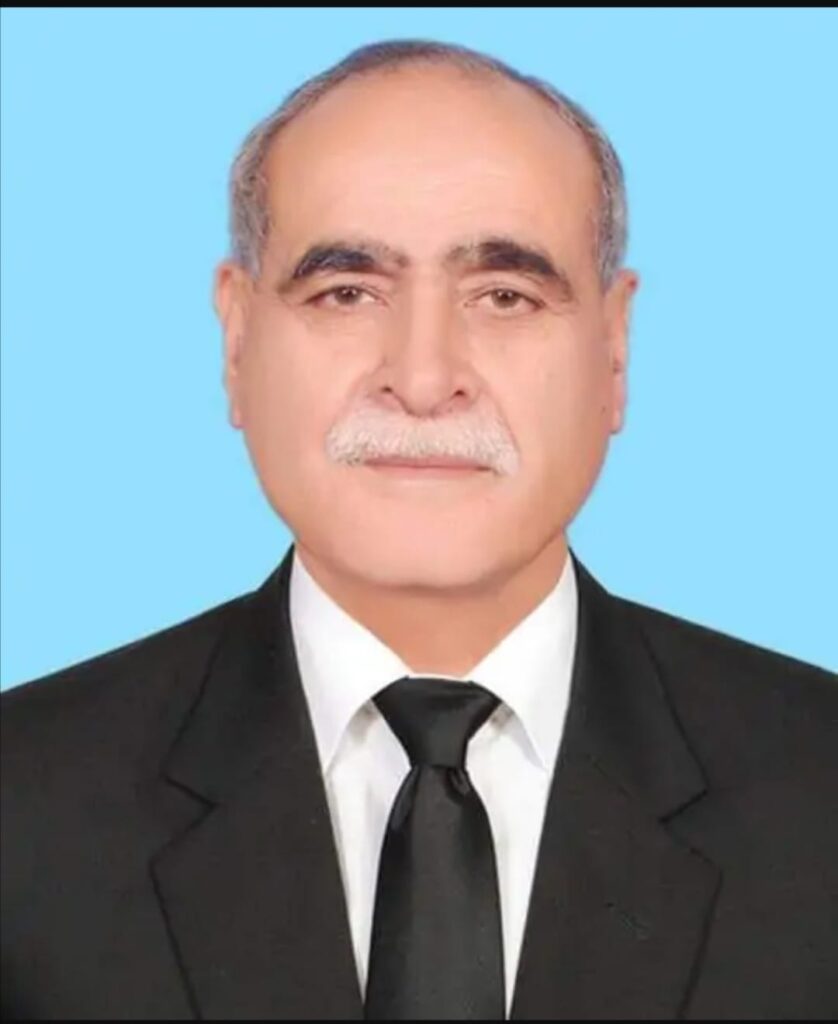
That this very date includes Quaid’s 149th birthday also marks the birth of Muhammad Nawaz Sharif is not merely a coincidence of the calendar, but a symbolic continuity of leadership across generations. December 25 thus connects the birth of a nation’s founder with the emergence of a modern statesman whose political journey has been deeply rooted in strengthening the state, stabilizing democracy, and advancing national development.Alongside its historic significance, December 25 also marks the birth anniversary of Muhammad Nawaz Sharif, a statesman whose political career spans over four decades and whose imprint on Pakistan’s political economy, democratic evolution, and development paradigm remains unmistakable. Born on December 25, 1949, in Lahore, Nawaz Sharif emerged from a business-oriented Kashmiri family, bringing into politics a practical understanding of industry, management, and economic growth—qualities that later defined his governance philosophy.Nawaz Sharif’s personality has consistently reflected composure, determination, and strategic patience. Unlike leaders driven by transient popularity or rhetorical theatrics, his politics has been anchored in outcomes, institutions, and long-term national planning. Supporters and colleagues recognize in him a leader who values consultation, continuity, and gradual but sustainable reform. These traits enabled him to navigate Pakistan’s turbulent political terrain with resilience, even during periods of institutional confrontation and personal adversity.His formal entry into politics in the early 1980s coincided with a phase when Pakistan urgently needed economic direction and administrative coherence. As Finance Minister and later Chief Minister of Punjab, Nawaz Sharif focused on industrial revival, infrastructure expansion, and governance efficiency. These early experiences shaped his understanding of statecraft and laid the foundation for what would later become his defining hallmark as Prime Minister: development-driven governance rooted in economic self-reliance.Serving as Prime Minister on three occasions, Nawaz Sharif articulated a clear and consistent political philosophy. At its core lay the belief that political sovereignty is incomplete without economic strength, and that nations command respect through development, stability, and institutional maturity. This worldview distinguished his leadership from populist or reactionary models and translated into tangible policy outcomes across successive tenures.Few civilian leaders in Pakistan’s history have left such a visible imprint on infrastructure development. The motorway network—initiated during his first tenure and expanded later—revolutionized internal connectivity, trade mobility, and regional integration. These were not mere roads but strategic economic arteries designed to reduce regional disparities and stimulate commerce. Energy projects, urban mass transit systems, and industrial zones followed the same logic: development as the engine of national progress.Equally significant was his commitment to economic liberalization and privatization. At a time when inefficient state-owned enterprises were draining national resources, Nawaz Sharif pursued market-oriented reforms to enhance efficiency and attract investment. While debated, history increasingly recognizes that these policies aligned Pakistan with global economic practices and modernized key sectors of the economy.On the strategic front, Nawaz Sharif demonstrated decisive statesmanship during the defining moment of 1998, when Pakistan conducted nuclear tests under immense international pressure. This decision cemented Pakistan’s status as a nuclear power, strengthened national deterrence, and reinforced public confidence in civilian leadership acting firmly in the national interest.During his third term, Nawaz Sharif further expanded Pakistan’s strategic horizon by laying the foundation of the China–Pakistan Economic Corridor (CPEC). Envisioned as a long-term partnership, CPEC aimed to overcome chronic energy shortages, infrastructure deficits, and connectivity challenges. Today, it remains a cornerstone of Pakistan’s economic planning and regional integration.Beyond policies and projects, Nawaz Sharif’s political wisdom is reflected in his consistent advocacy for constitutional supremacy, civilian governance, and institutional balance. His political journey—marked by setbacks, disqualifications, and comebacks—illustrates patience and faith in democratic struggle rather than retreat or confrontation.For his followers, Nawaz Sharif’s politics has never been about personal glorification. It has been about building systems that outlast individuals—roads that connect generations, power plants that sustain industry, and institutions that anchor governance. Even outside office, his influence continues through ideas, mentorship, and strategic guidance.Today, his political vision is carried forward through continuity rather than symbolism. Prime Minister Shahbaz Sharif reflects administrative discipline and crisis management at the federal level, while Chief Minister Maryam Nawaz Sharif represents a reform-oriented, development-focused leadership in Punjab.As an architect of Pakistan’s development-centric politics and a statesman shaped by experience and restraint, Nawaz Sharif occupies a distinct place in contemporary history. His legacy stands not as a chapter closed, but as a living continuum—guiding Pakistan’s democratic journey in the spirit of December 25, a day forever associated with leadership, vision, and national purpose.
Alright folks, if you’re looking for a new spot, betpawalogin might be up your alley. I had a decent experience. Give it a shot: betpawalogin
789bet09 – keep hearing this mentioned. Anyone had any good experiences there? Thinking of giving it a go. Let’s check 789bet09 out!
Alright guys, 456betlogin looks like it’s got some potential. The login process was smooth and quick, which is always a plus. Gonna give it a proper run through tomorrow. Here’s the link if you wanna have a peek: 456betlogin
Alright, so I’m looking for the freshest link to 188bet, right? Linkvao188betmoinhat, you better be the real deal! If it works, you’re a lifesaver. Easy access is key! Find it here: linkvao188betmoinhat
Evo888apk, nice! Easy to get going with some really cool games. Downloaded it right away and played a few rounds. The payout rate seems fair, and the graphics are on point. Check it out at evo888apk.