Genocide Prevention Day: Seminar Organized to Commemorate Genocide and Collective Atrocities Committed Against Muslim Populations
Like the issue of Islamophobia, genocide of Muslim Populations also demands serious attention at global forums: Speakers
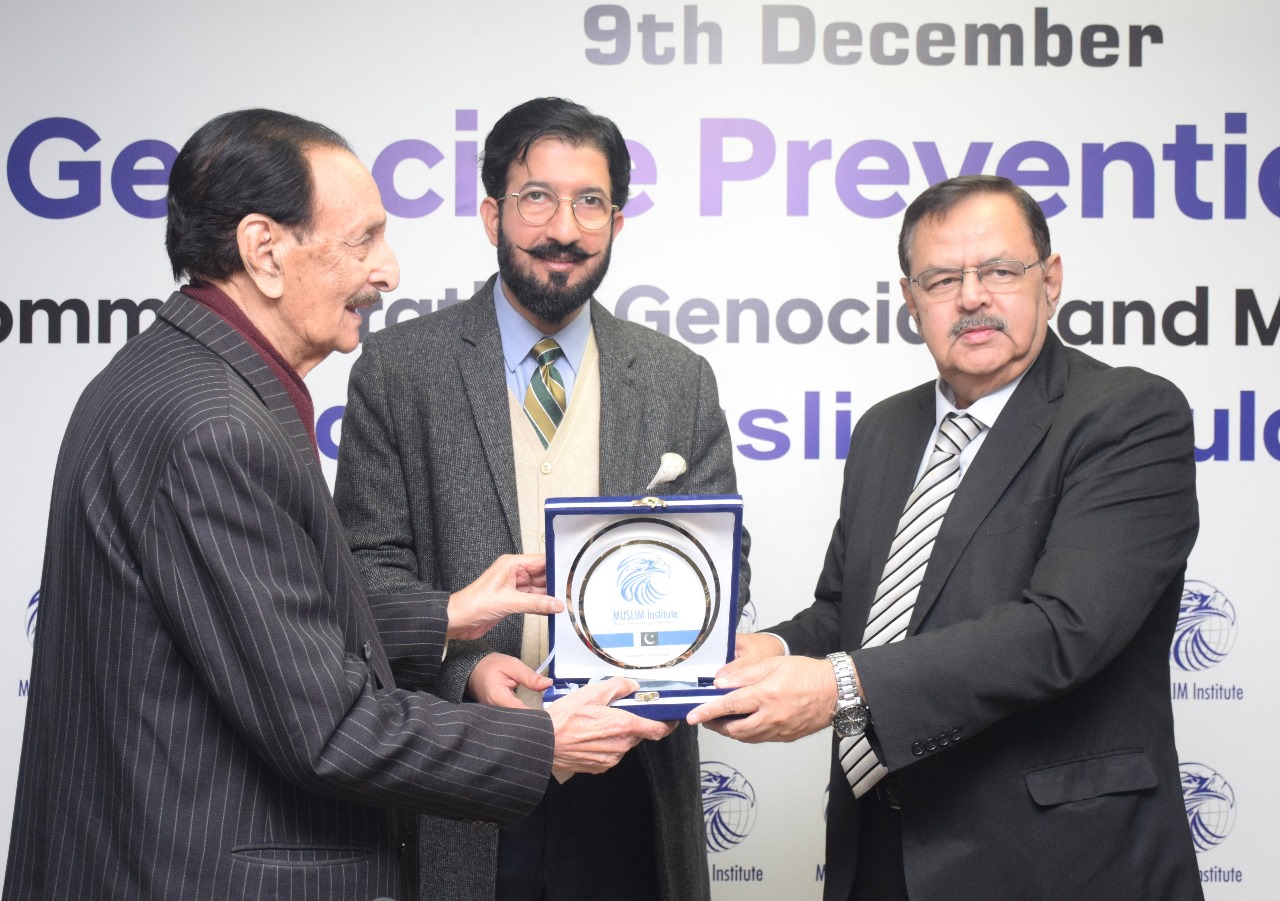
Islamabad () MUSLIM Institute convened a seminar titled “Genocide and Mass Murders of Muslims in Contemporary History (1857 to Date)”, bringing together eminent scholars and diplomats, including Sahibzada Sultan Ahmed Ali, Chairman MUSLIM Institute; Raja Zafar ul Haq, Secretary General Motamar Al-Alam Al-Islami; Ambassador (R) Afrasiab Mehdi Hashmi Qureshi; and Major General (R) Khalid Amir Jaffery, former Ambassador to Bosnia and Herzegovina with Dr. Alia Sohail Khan moderating the session. Speakers noted that history bears painful witness to the organized and often state-sponsored genocides and mass killings carried out against Muslim populations, targeting their cultural identity, historical heritage and even their physical survival. This pattern, they said, is not confined to one region but stretches from North Africa to Eastern Europe, from Central and South Asia to Southeast Asia. While genocide is often viewed as a tragic chapter of the past, for Muslims around the world it remains a living reality. Speakers emphasized that this is a forgotten subject, and if we fail to remember and discuss it, these truths risk being buried. They stressed that just as Islamophobia was collectively raised at international platforms and eventually led to an UN-recognized day, the issue of Muslim genocide requires the same seriousness, coordination and firm resolve to ensure its global recognition. The speakers referenced decades of systematic atrocities committed under colonial and imperial policies including during the British Raj, by Russian authorities in Chechnya, in Bosnia, the Balkans, against the Rohingya, Turks, Libyans, Palestinians, and in India, all of these events report the killing of more than 13 million Muslims, displaced or forced to flee their homes. Speakers noted that Palestinians, Kashmiris and Rohingya continue to suffer such brutalities today, and also recalled the 2002 Gujarat massacre where thousands of Muslims were killed, while global human rights organizations like Genocide Watch and Amnesty International exposed the grave failures, apathy and negligence of the then-state government. International bodies also criticized the government for failing to act in time, resulting in massive loss of life and property, and in some instances even encouraging the violence. The speakers underscored that the world must realize these collective atrocities against Muslims are not internal matters but clear violations of international human rights frameworks and the 1948 Genocide Convention. The ongoing oppression in Palestine, systematic abuses in Kashmir, the forced displacement of the Rohingya, the historical genocide in Bosnia and the rising tide of religiously motivated violence in India all pose serious questions to the conscience of humanity. The seminar was attended by participants from diverse fields, including ambassadors from various countries, academics, media representatives and especially a large number of university students.